


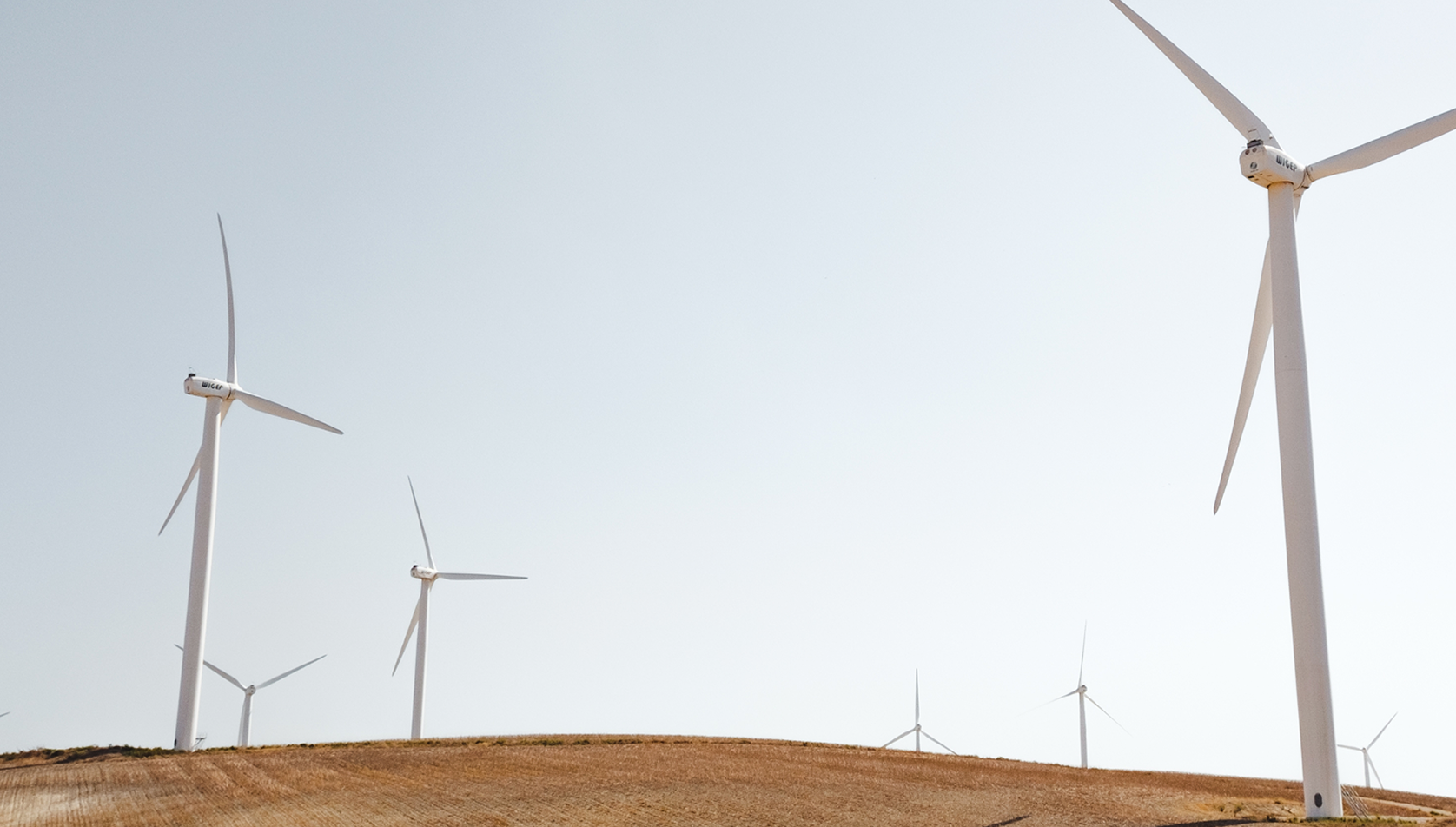
Wind Turbine
Structural Analyses
At Nabla Wind Hub, we provide advanced structural integrity services for wind turbines, integrating aeroelastic modeling, finite element analysis (FEM), and fatigue damage assessment.
Our studies combine real operational and design data (O&M and SCADA) with dedicated structural simulations to evaluate the mechanical behavior of key components throughout their lifecycle, both in onshore and offshore turbines.
Through reverse engineering, Bladed simulations, and specialized structural post-processing, we develop turbine-specific models that enable:
- Identification of dominant structural damage mechanisms.
- Quantification of stresses and structural margins under defined load conditions.
- Evaluation of mitigation strategies, retrofits, or design validation.
Technical Applications
These analyses are applied in damage mitigation studies, Aging Management Plans (AMP), and Root Cause Analysis (RCA), providing a quantified technical foundation for evaluating structural integrity and the operational viability of the asset.

Absolute Analyses
Component-Specific Structural Engineering
Maximum Confidence:
95%

TYPE OF ANALYSIS
Detailed structural assessment through turbine-specific aeroelastic modeling and development of finite element models (FEM) tailored to the component.
RESULTS
Quantification of stresses, limit states, structural margins, and damage mechanisms under defined load conditions.
METHODOLOGY
Geometric definition and material characterization, development of the aeroelastic model, generation of component-specific loads, and analytical and numerical structural analysis.
SUPPORT FOR STAKEHOLDERS
Technical defense of results in structural validation environments, technical claims, or third-party review processes.

Certifiable when required by the scope of work and applicable standards.
USE OF RESULTS
Component structural validation, root cause analysis, design modification assessment, damage mitigation, or retrofit support.
Absolute Analysis Methodology

Absolute Analyses
For Wind Assets
For operating wind assets (O&M), Absolute Analysis provides a detailed structural assessment under actual operating conditions. By combining advanced modeling with field evidence, the service enables evaluation of the integrity of critical components and the definition of technical actions aimed at optimizing risk, cost, and operational performance.
Class A
High Confidence
95%
Represents the highest level of precision in estimating remaining life, based on detailed analysis of loads and accumulated damage under actual operating conditions.
Absolute Analysis Methodology
Problem or Need Identification
Definition of the technical scope of the study according to the asset context:
- Damage Mitigation.
- Aging Management Plan (AMP).
- Failure Investigation / RCA.
- Validation of modification or reinforcement.
The objective of the analysis is then defined: structural integrity assessment, remaining-life estimation, or technical decision support.
Geometric Definition and Material Characterization
Collection and validation of relevant technical information:
Geometry
- Available drawings and documentation.
- 3D scanning / in-situ measurements.
- Inspections and non-destructive testing (NDT).
Material Properties
- Literature and standards review.
- Experimental testing when applicable.
- Characterization for static, fatigue, and fracture analyses.
Representative assumptions of the “as-built / as-operated” condition are then defined.
Development of Structural Models
Development of models appropriate to the required level of detail:
- Simplified analytical models for critical components.
- Finite element models at component or local-detail level.
- Definition of representative boundary conditions and loads.
Where applicable, integration with previous studies (aeroelastic or relative analyses) is performed to extract load cases consistent with actual operating conditions.
Structural Evaluation
Analysis under representative scenarios:
- Stress and strain evaluation.
- Stress concentration factors.
- Load combinations.
- Fatigue and static strength assessment.
- Estimation of consumed life and remaining life.
Critical points and levels of structural criticality are then identified.
Integration of Results and Risk Assessment
Consolidation of analytical and numerical results to:
- Determine structural margins.
- Evaluate probability of failure.
- Prioritize critical components or areas.
Conclusions and Recommendations
Definition of the technical action plan:
- Repair and reinforcement strategies.
- Component replacement or redesign.
- Operational recommendations (limitations, curtailments, O&M adjustments).
- Prioritization of actions according to risk level.
- Technical support for CAPEX/OPEX decision-making.
condiciones del viento
FEM-Based Replacement and Maintenance Protocols
Our studies include identification of lifting points, centers of gravity, information fields on identification plates (ID), and manufacturer references. The component replacement process is detailed step by step, serving as guidance for the design of dedicated tooling and the definition of critical interfaces between components:

In addition, technical documentation is provided for the design of ground supports, procedures for unloading the complete rotor, and definition of the logistical process for lifting tools to the tower. This includes compatibility with crane and elevator systems, as well as hatch dimensions on tower platforms.

The Absolute Analysis approach combines aeroelastic model development, geometric and material definition, and finite element simulations, complemented by analytical structural assessments.
This integration enables evaluation of structural response under specific load spectra and supports recommendations based on quantified results.
Aging Management Plans (AMP)
For Wind Assets
An Aging Management Plan (AMP) establishes the technical framework to identify, monitor, and manage the degradation mechanisms affecting the structural and functional components of a wind turbine throughout its operational life.
Its implementation enables structured operation under aging conditions through defined technical criteria, integrating damage monitoring, scheduled inspections, and mitigation measures aimed at preserving structural integrity, optimizing risk, and extending the asset’s service life in a controlled manner.
Advanced Engineering
for AMP
Nabla’s Aging Management Plan is supported by advanced engineering tools that enable quantification of risks, prioritization of interventions, and definition of technical strategies aligned with the asset’s actual structural condition.
Structural modeling using FEM/FEA
Development of structural models representing critical components under actual operating conditions
- Detailed evaluation of stresses and strains.
- Identification of stress concentrations.
- Analysis under relevant load combinations.
- Structural validation of aging scenarios.
This approach enables quantification of structural margins and supports technical decision-making based on analytical evidence.
Damage tolerance analysis
Assessment of component capability to operate with existing defects or degradation
- Crack propagation analysis.
- Evaluation of fatigue and fracture mechanisms.
- Determination of critical damage thresholds.
- Definition of safe operational limits.
Provides a technical basis to justify continued operation or to define corrective interventions.
Optimization of maintenance protocols
Adjustment of inspection and maintenance strategies based on actual structural behavior
- Definition of inspection frequencies based on criticality.
- Prioritization of components according to risk.
- Adjustment of preventive and corrective maintenance plans.
- Integration with operational and structural indicators.
Enables the transition from reactive maintenance to a structured aging management approach.
Structural reinforcement design
Development and validation of technical solutions to extend service life
- Conceptual design and analytical verification.
- Evaluation of structural compatibility.
- Performance validation under real load conditions.
- Technical support for field implementation.
Focused on extending service life while maintaining controlled risk levels.
Technical Outcomes in Wind Asset Management
- Controlled life extension based on quantified structural assessment.
- Prioritization of interventions according to criticality and risk level.
- Optimization of maintenance strategies under aging conditions.
- Mitigation of the impact of unplanned events.
- Preservation of the asset’s structural and functional integrity.
Root Cause Analysis (RCA)
For Wind Turbine Components
Root Cause Analysis (RCA) is a technical service aimed at rigorously identifying the physical and operational causes behind failures in wind turbine components.
By combining expertise in aerodynamics, loads, structural modeling, and field operations, the Nabla team integrates technical analysis with contractual review (O&M and EPC) to establish a well-founded and traceable diagnosis.
This approach provides solid technical evidence to support decision-making, claims management, and assistance in negotiation or arbitration processes when necessary.

Methodology for Root Cause Analysis (RCA)
A rigorous determination of a failure’s root cause requires correlating field evidence with quantified structural analysis.
Nabla’s RCA integrates technical inspections, non-destructive testing (NDT), load analysis, and advanced modeling to precisely identify the physical origin of the failure and its operational context.
This approach transforms isolated events into well-founded, traceable technical diagnoses.
Definition of the event and scope boundaries
Precise identification of the affected component, failure type, and operational context
- Characterization of the failure mode.
- Collection of initial evidence.
- Definition of preliminary hypotheses.
- Technical and contractual scope delimitation.
Establishes the technical framework for the analysis.
Collection and validation of data
Consolidation of relevant technical and operational information
- SCADA histories and alarms.
- Wind and operational conditions.
- Maintenance records and interventions.
- Design documentation (EPC, O&M, OEM).
- Inspection reports and field evidence.
Inconsistencies are verified, and data is cleaned prior to modeling.
Quantified technical analysis
Structural and operational assessment to validate hypotheses:
- Load and aeroelastic behavior analysis.
- Evaluation of actual operational conditions vs. design.
- Structural modeling (analytical and/or FEM).
- Fatigue analysis, overloads, or transient phenomena.
- Damage tolerance assessment where applicable.
Determines whether the failure stems from:
- Excessive load.
- Design deficiency.
- Unanticipated operational conditions.
- Inadequate maintenance.
- Interaction between factors.
Contractual assessment and technical assignment of responsibilities
Linking the technical diagnosis to the contractual framework:
- Review of technical specifications and warranties.
- Analysis of design limits and contractual obligations.
- Determination of well-founded technical responsibilities.
Always based on a quantified and traceable foundation.
Conclusions and decision support
Issuance of a structured report including:
- Determination of the root cause with analytical support.
- Assessment of technical and operational impact.
- Estimation of residual risk.
- Technical mitigation recommendations.
- Technical support for claims, arbitration, or negotiations.
This RCA service provides asset managers with an advanced technical evaluation of failures and a structured view of the risk associated with the actual condition of their wind assets.
Through root cause analysis, it enables:
Identification and quantification of technical causes affecting component performance and integrity.
Determination of technical and contractual responsibilities with traceable analytical support.
Evaluation of the operational and financial impact of the failure.
Definition of mitigation strategies and intervention criteria based on criticality.
Integration of results into Ageing Management Plans (AMP) to ensure long-term operational continuity.
Our approach combines advanced structural analysis, load modeling, and technical review of operations to precisely identify the mechanisms behind failures. This allows for well-founded diagnostics and provides robust technical support in incident management, contractual claims, and strategic decisions regarding asset operation and reliability.
Damage Mitigation Programs
For Wind Turbine Components
Damage mitigation programs are part of Nabla’s comprehensive engineering approach aimed at preserving structural integrity and optimizing the lifecycle of wind assets.
This service acts as a complementary phase to life assessment analyses (P90), RCA, or AMP, defining technical strategies to control, stabilize, or eliminate identified damage mechanisms.
The objective is to reduce the structural and operational impact of existing or potential damage, ensuring continuity of service, turbine reliability, and optimization of maintenance costs.
Methodology for Damage Mitigation Programs
Identification and characterization of damage
Precise definition of the active mechanism and its structural criticality
- On-site technical inspection.
- Non-destructive testing (NDT) when applicable.
- Geometric assessment and evaluation of the component’s actual condition.
- Preliminary cause analysis (if no prior RCA exists).
This phase determines whether the damage is stable, progressive, or critical.
Quantified structural assessment
Analysis of damage impact on structural behavior:
- Analytical or FEM modeling of the affected component.
- Evaluation of stress concentrations.
- Fatigue analysis and damage tolerance assessment.
- Estimation of remaining life under current conditions.
This allows quantification of the actual risk associated with the defect.
Definition of mitigation strategy
Design of technical measures proportional to risk level
- Local or global structural reinforcements.
- Partial redesign of critical elements.
- Operational adjustments (limitations, curtailments).
- Modifications to maintenance protocols.
Each measure is structurally validated prior to implementation.
Validation and verification
Technical confirmation of the proposed solution’s effectiveness:
- Post-intervention structural simulation.
- Verification of geometric and operational compatibility.
- Definition of installation requirements.
Ensures that the mitigation reduces risk to acceptable levels.
Integration into lifecycle strategy
Incorporation of measures into the asset’s overall framework:
- Update of the Ageing Management Plan (AMP).
- Adjustment of inspection frequencies.
- Monitoring of post-mitigation performance.
- Periodic reassessment based on actual behavior.
The mitigation becomes a tool for controlled life extension.
By integrating load analyses, structural modeling, and operational data, tailored mitigation strategies are developed for each asset and damage mechanism. This approach provides a solid technical foundation to reduce structural risks, enhance turbine reliability, and extend the service life of critical components.
Related Services
You Might Be Interested In